The Clean Bedroom Guide
Choosing an Organic Crib Mattress: Materials, Fit, and Care
A thoughtful crib mattress choice is less about a persuasive label than the details beneath it: how the mattress is made, whether it fits the crib securely, what its certifications actually cover, and how its care instructions hold up to family life.
A practical guide to materials, construction, infant sleep safety, and everyday maintenance.
An infant’s sleep space has a particular kind of quiet importance. It is one of the first settings a family prepares with care, often balancing practical decisions with a desire for natural materials and a room that feels calm. Organic crib mattresses can be part of that conversation, but “organic” is only one consideration in a larger decision. It does not replace the need to check the mattress’s fit, firmness, construction, safety information, and care requirements.
Start with the fundamentals. The mattress should be designed for the exact crib or bassinet in use, fit snugly without noticeable gaps, and provide a firm, flat sleep surface. Follow current safe-sleep guidance from your pediatrician and public health authorities. Keep the sleep space simple: a fitted sheet over the mattress, with no pillows, loose blankets, bumpers, positioners, or soft toys. A beautifully considered nursery can still be pared back where it matters most.
This guide offers a framework for comparing organic crib mattress materials and construction, understanding certifications, confirming fit, and caring for the mattress over time. It is informational rather than medical advice; questions about an infant’s sleep or health are best discussed with a qualified clinician.
What “organic” does—and does not—tell you
The word organic can refer to the agricultural source of a material, the processing of a textile, or a product’s certification under a defined standard. Those are meaningful distinctions. Organic cotton, for instance, describes the fiber and its agricultural production under applicable requirements; a finished mattress may contain several materials, each with its own origin and processing history.
Read the full materials list rather than treating a single label as a complete account of the mattress. Ask what is used in the core, cover, seams, waterproofing layer, and any flame-retardant barrier. Manufacturers should be able to explain whether a component is cotton, wool, latex, polyester, a polymer film, or another material, and to make relevant documentation available. A clear, specific explanation is more useful than broad language such as “natural” or “chemical-free.” Everything made of matter consists of chemicals; the practical question is what substances are present, how they are used, and what standards or testing apply.
Organic certification also does not, by itself, establish that a mattress is the safest option for every infant, eliminate all possible sensitivities, or guarantee a particular sleep outcome. Nor does it make mattress fit or firmness less important. Treat material preferences as one layer of the decision, alongside safety requirements, manufacturing transparency, product instructions, and the needs of your household.
When comparing brands, including well-known names such as Naturepedic, use the same checklist for each product. Look at the specific mattress model, not just the brand’s general claims. Certifications and materials can differ across product lines, so verify the details for the item you are actually considering.
Compare the construction, not just the cover
Crib mattresses commonly use a foam core or a spring-based core, while some models combine layers or use other materials. There is no need to assume that one category is automatically preferable. The important questions are whether the finished mattress is firm, flat, intact, properly sized for the crib, and made according to applicable standards. A soft, quilted surface may look inviting, but for an infant’s sleep surface, softness is not a substitute for suitability.
Foam cores
Foam mattresses are often relatively light, which can make sheet changes and routine handling simpler. Ask what type of foam is used, how the core is constructed, and whether the manufacturer publishes information about emissions testing or other relevant product testing. Check the stated weight, cleaning method, and any guidance on airing or initial odor. A temporary odor is not a reliable way to determine a product’s safety; follow the manufacturer’s directions and contact the manufacturer if you have a concern.
Spring-based cores
Innerspring models use a network of coils within the mattress. Their construction may affect weight, edge design, and how the mattress feels when handled, but the presence of springs alone does not establish quality or safety. Review the full product specifications, including cover materials, structural support, firmness information, and instructions for use. For any mattress type, do not use it if it is damaged, sagging, or no longer holds its shape.
Cover and moisture barrier
The cover is the part most likely to meet the fitted sheet and, in everyday use, may be exposed to spills or diaper leaks. Some mattresses have a removable cover; others rely on a wipe-clean surface or a built-in waterproof layer. Ask whether the cover can be washed, whether it must remain attached, and what cleaning methods are permitted. A breathable-sounding description is not enough to establish how a mattress performs, and a waterproof layer can involve materials distinct from the outer textile.
Choose a design whose care instructions you can realistically follow. A mattress that requires a specific cleaning method may be perfectly manageable, but it is better to understand that before a late-night spill rather than discover it after one.
Make certifications specific
Certifications can help clarify what has been assessed, but different programs address different parts of a product’s story. A certification for an organic textile, for example, should not automatically be read as certification of every mattress component. Likewise, an emissions or chemical-content standard is not interchangeable with an agricultural certification.
When a mattress is described as certified, find out which organization issued the certification, which standard applies, what components are covered, and whether the specific model appears within the certifier’s scope. Look for documentation rather than relying on a logo or a general statement about a brand. If the information is difficult to find, contact the manufacturer with direct questions. A responsible company should be able to explain its claims in plain language.
- Ask what is certified: the fiber, the finished textile, the mattress, a component, or a manufacturing facility?
- Check the exact model: certification for one product in a collection may not apply to another.
- Separate certification from safety instructions: no label removes the need to follow the mattress and crib manufacturers’ directions.
- Look for current documentation: standards and product formulations can change, so verify details at the time of purchase.
These steps are useful whether your priority is organic crib mattresses, a particular core material, or simply a transparent account of what touches the baby’s sleep environment. The aim is not to collect labels; it is to understand what each one means.
Fit is not a finishing detail
A crib mattress must be compatible with the crib model and fit the frame without gaps around the edges. Do not rely on a familiar size description alone: check the crib and mattress manuals, including the manufacturer’s specified dimensions and any approved combinations. Mattresses and cribs that appear to be standard size can still differ in actual dimensions.
Once assembled, place the mattress in the crib as directed and check the perimeter. It should sit level and snugly, without an obvious space between the mattress and the crib sides. If you can see a gap, the mattress shifts, or the mattress does not lie flat, do not try to solve the problem by filling the space with towels, padding, or improvised materials. Contact the crib or mattress manufacturer to confirm compatibility, and use the product only as directed.
Check the mattress height and support system as the infant grows, following the crib manufacturer’s instructions for moving the mattress platform. Inspect the mattress periodically for tears, sagging, broken seams, or other damage. Avoid using an old or secondhand mattress if you cannot verify its condition, fit, history, and compatibility with the crib. If any aspect seems uncertain, ask the manufacturer or a qualified child-safety professional before use.
Do not add a topper or extra padding to alter firmness or fit. Keep the mattress on the crib’s intended support, with a tightly fitted sheet designed for that mattress. A well-fitted sheet should stay secure; if it is loose, stretched, or difficult to fit correctly, check its size and condition rather than layering on another surface.
A fitted sheet is the right companion
In a safe infant sleep setup, the bedding layer should be simple: a fitted sheet that is made for the mattress and stays securely in place. Fabric preferences—such as organic cotton—can be considered for comfort and care, but the sheet must fit properly and be used according to its instructions. Avoid placing quilts, loose blankets, pillows, comforters, or decorative cushions in the crib.
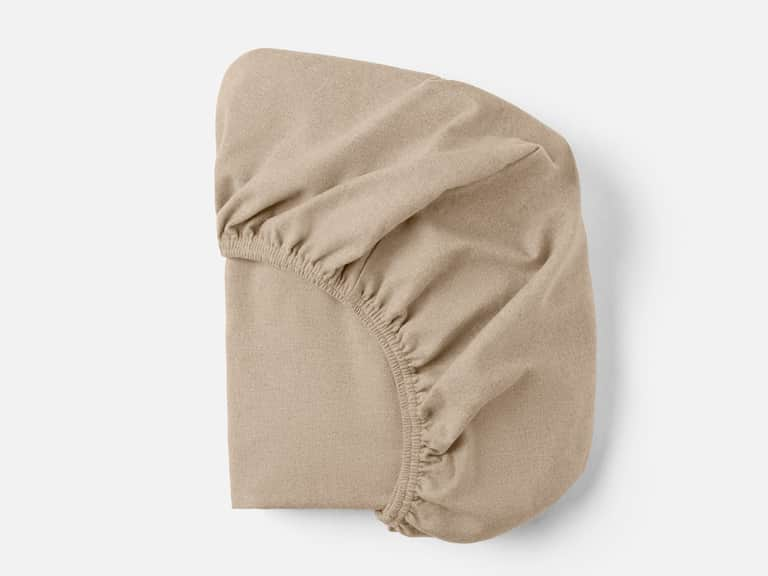
For example, the Cloud Brushed Organic Flannel Crib Sheet is described as a GOTS-certified organic cotton fitted sheet measuring 28 by 52 inches, with an 8-inch depth. Its care directions call for a cold, gentle wash and low tumble drying. These specifications illustrate the sort of details worth checking: fiber and certification claims, dimensions, depth, and laundering instructions. They do not replace confirming that any sheet is suitable for the particular mattress and crib in use.
Fit should remain secure after laundering. Follow the sheet’s care label, avoid excessive heat if the instructions advise against it, and replace a sheet that becomes loose, stretched, torn, or otherwise compromised. Keeping a spare fitted sheet ready can make changes easier, without adding extra bedding to the sleep space.
Care that is simple, consistent, and gentle
Before the mattress is used, read its care and setup instructions from beginning to end. Some manufacturers recommend airing a product before use; others specify a particular cleaning method or advise against certain cleaners. Follow the exact directions for that model. Do not assume that a mattress can be soaked, machine-washed, steam-cleaned, or treated with disinfectants simply because another mattress can.
For routine maintenance, remove the fitted sheet and clean the surface only as instructed. If the mattress permits wiping, use the approved method and allow it to dry completely before replacing the sheet. Do not use harsh chemicals, fragrances, or unapproved sprays in an attempt to make the sleep space smell fresh. Strong fragrance is not a measure of cleanliness, and unnecessary treatments can conflict with product guidance.
Use a mattress protector only if the mattress manufacturer permits it and the protector is designed to fit securely without changing the firmness or surface of the mattress. Avoid adding an aftermarket cover that bunches, shifts, or creates a soft, padded layer. A protector should never undermine the mattress’s fit or the manufacturer’s safety instructions.
With organic textiles, care labels are especially worth respecting: natural fibers can shrink, change texture, or wear differently depending on temperature and drying method. Wash fitted sheets regularly according to their instructions, and make sure they are fully dry before use. If the mattress becomes wet or soiled, follow the manufacturer’s cleaning instructions promptly and confirm that it has dried thoroughly.
Questions to ask before you choose
A short, practical comparison can bring clarity to a crowded field of claims. Before buying, look for answers to these questions:
- Is this mattress specifically intended for the crib or sleep product I have?
- What are its exact dimensions, and how does the manufacturer describe a correct fit?
- What materials are used in the core, cover, seams, and any moisture barrier?
- What does “organic” refer to, and which specific components are certified?
- Are there current certificates or testing documents for this exact model?
- What are the setup, cleaning, drying, and maintenance instructions?
- Does the manufacturer provide clear guidance about firmness, damage, and replacement?
- Can the mattress be used with the crib according to both manufacturers’ directions?
These questions are not a test of how much research a parent has managed to do. They are a way to make a complicated purchase more legible. If an answer is vague, ask for specifics. If two manufacturers provide conflicting compatibility information, pause and seek clarification before using the products together.
A calm nursery begins with the essentials
The idea of a clean bedroom is often expressed through texture, color, and careful organization. For an infant’s sleep area, restraint is more than an aesthetic choice: it keeps attention on a clear, firm, flat sleep surface and the instructions for using it safely. A thoughtfully chosen organic crib mattress may suit a family’s material preferences, but no material story is complete without a secure fit, transparent construction, and realistic care plan.
Take time to compare the exact models on your shortlist, verify certifications rather than assuming what a label covers, and measure compatibility through the crib and mattress instructions. Keep the sleep space uncluttered, use only a secure fitted sheet, and consult your pediatrician or local public health guidance for current infant sleep recommendations. With those essentials in place, the decision can be both considered and reassuring: less about chasing an idealized nursery, and more about creating a practical, dependable place for rest.
A considered choice is built from verifiable details: materials, construction, fit, and care—not from a label alone.